Schools want to purchase playground swings. Churches have plans to gather non-perishable food items for their local communities. Youth teams require assistance to fund their upcoming travel. While all of these organizations would be able to sell sweets, loose candies may appear disorganized and create uncertainty regarding pricing. Candy boxes provide an organization with a straightforward method of transforming individual purchases (of relatively inexpensive treats) into a product consumers can feel positive about purchasing.
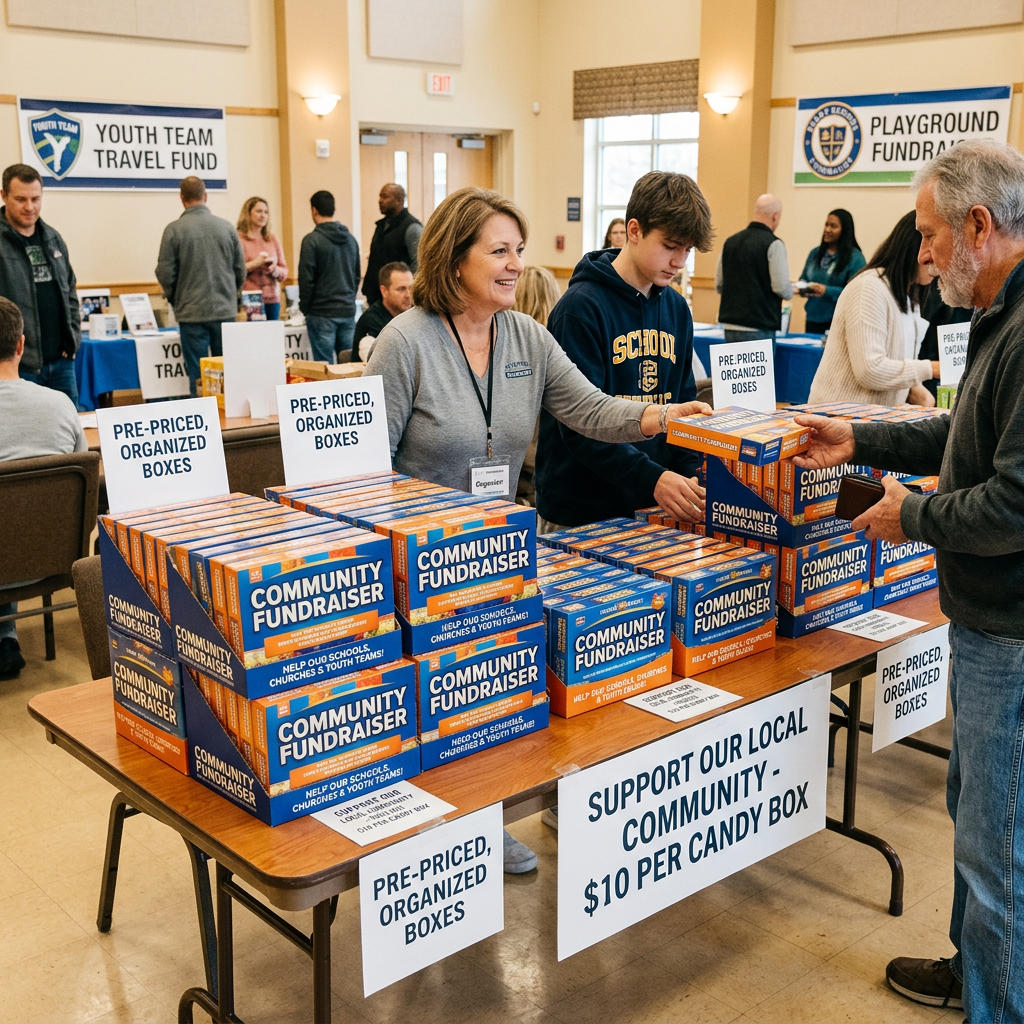
Step #1: Identify Your Goal: Clearly identify what you wish to accomplish from your candy box fundraiser. The greater clarity there is regarding the ultimate destination of the funds collected, the more inclined potential donors will be to contribute. An example statement identifying your goal could be “the funds we collect go toward the purchase of books for our library,” “the monies raised go toward providing meals for individuals at risk of hunger within our community,” or “the funds collected go toward paying for athletic equipment/sports fees.” Write this statement on the box and include the name of your organization.
This allows potential contributors to clearly recognize both the purpose behind the purchase and the organization making the request.
Step #2: Determine How Much Candy Will Be Included Within Each Box; Decide How Many Pieces of Candy Each Person Should Get. Before determining a price point, determine how many pieces of candy each person will receive. Consider how many people you anticipate selling candy to. Twelve small-sized pieces of chocolate may generate more revenue than four larger chocolate bars if your objective is to attract as many customers as possible. Also consider using consistent amounts within each box to avoid creating issues with unequal portions among buyers. By consistently packaging a similar amount of candy in each box, the process of packing will move quicker for volunteers and allow for a more accurate accounting of funds generated during the event.
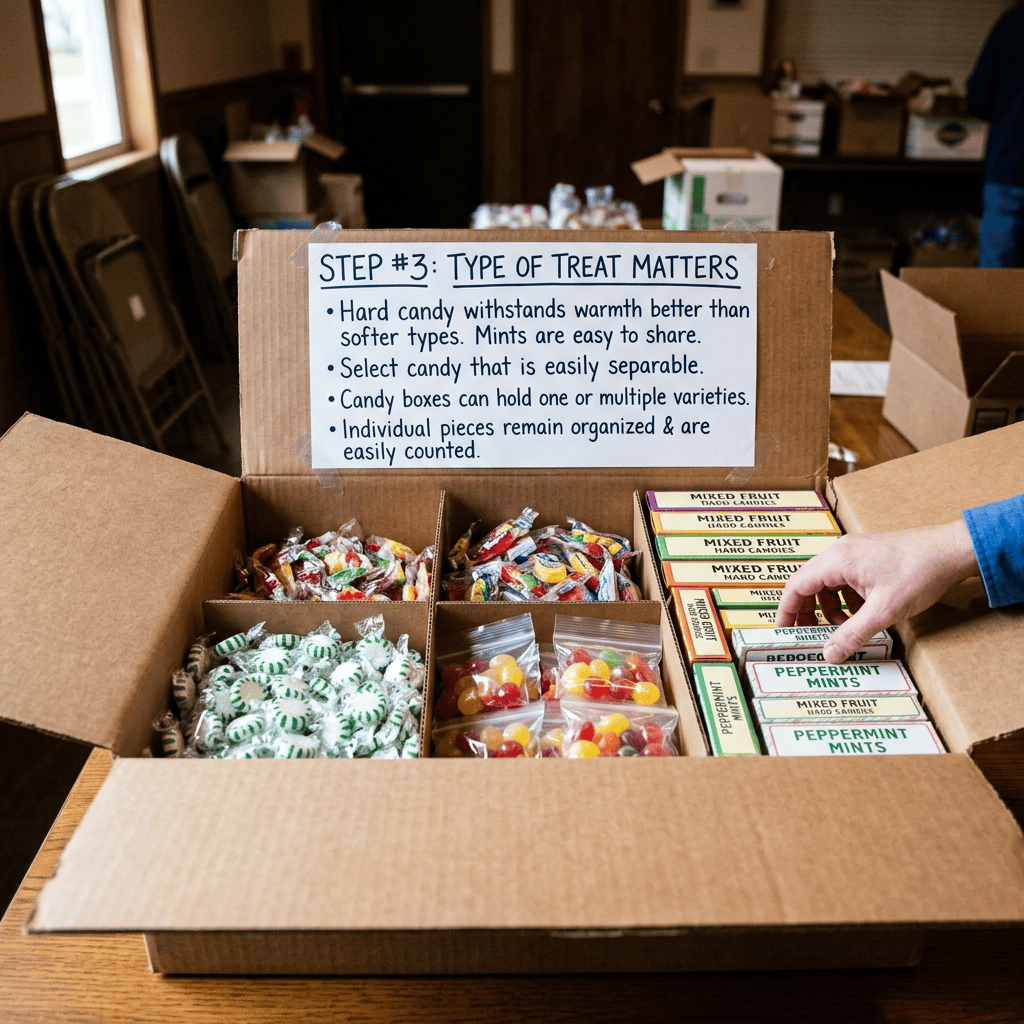
Step #3: Type of Treat Matters. There are different types of candy available depending upon how well they withstand warmer temperatures. For instance, some types of hard candy can withstand warmer environments longer than softer varieties such as chocolate. Mints that are wrapped individually may be easier for children to share than chewy candies. If children are expected to participate in assisting with sales, select candy that is easily separable from other candies. Additionally, candy boxes can be filled with one variety of candy or multiple varieties provided the individual pieces remain organized and are easily counted.
Step #4: Food Label Requirements Must be Carefully Considered. Some candies contain ingredients which are common allergens such as milk, peanuts, tree nuts, soy, or wheat. Include either the manufacturer’s label or list those ingredients where they can be seen/read by prospective purchasers. Never state that a specific treat is safe for someone who has a known food allergy unless you are absolutely certain that the ingredient(s) listed do not pose a problem. Maintaining cleanliness throughout the entire process (hands and surfaces) will enable the group to properly prepare the candy boxes.
Step #5: Test Run. Conducting a trial/test run prior to distributing candy boxes to prospective buyers can assist in preventing problems on distribution day. Prepare all materials including the candy, labels, tape, and completed boxes in a sequence representative of how volunteers will access them during the actual event. Measure how long it takes to complete 10 boxes. In doing so, you can quickly assess if additional support staff members are needed, if additional supplies are required, or if another area/location will be necessary for distribution/packaging.
Step #6: Where & When to Sell: Determine where and when to conduct your candy box fundraiser. Events such as school games, craft fairs, church functions and/or town festivals/centers are excellent places to find the target audience for your organization. Display a clear and descriptive sign listing the cost per box and highlighting the purpose/goal of your fundraiser. Once potential donors understand why they are being asked for financial contributions, even a small box of candy will seem like a significant contribution.

