You could wrap your candy in beautiful paper and create a nice problem for yourself if you put a tight-lid on it. Some customers are going to have difficulty opening some types of candy because their hands will hurt; they’ll have weak finger muscles; they won’t be able to see well; or they won’t have a good grip. Additionally, many customers will need to open packages holding children. Candy boxes should protect what’s inside but should never make the customer feel like he has to “unlock” the candy. Helping many more customers enjoy treats is easier if there’s an easier way to open these containers.
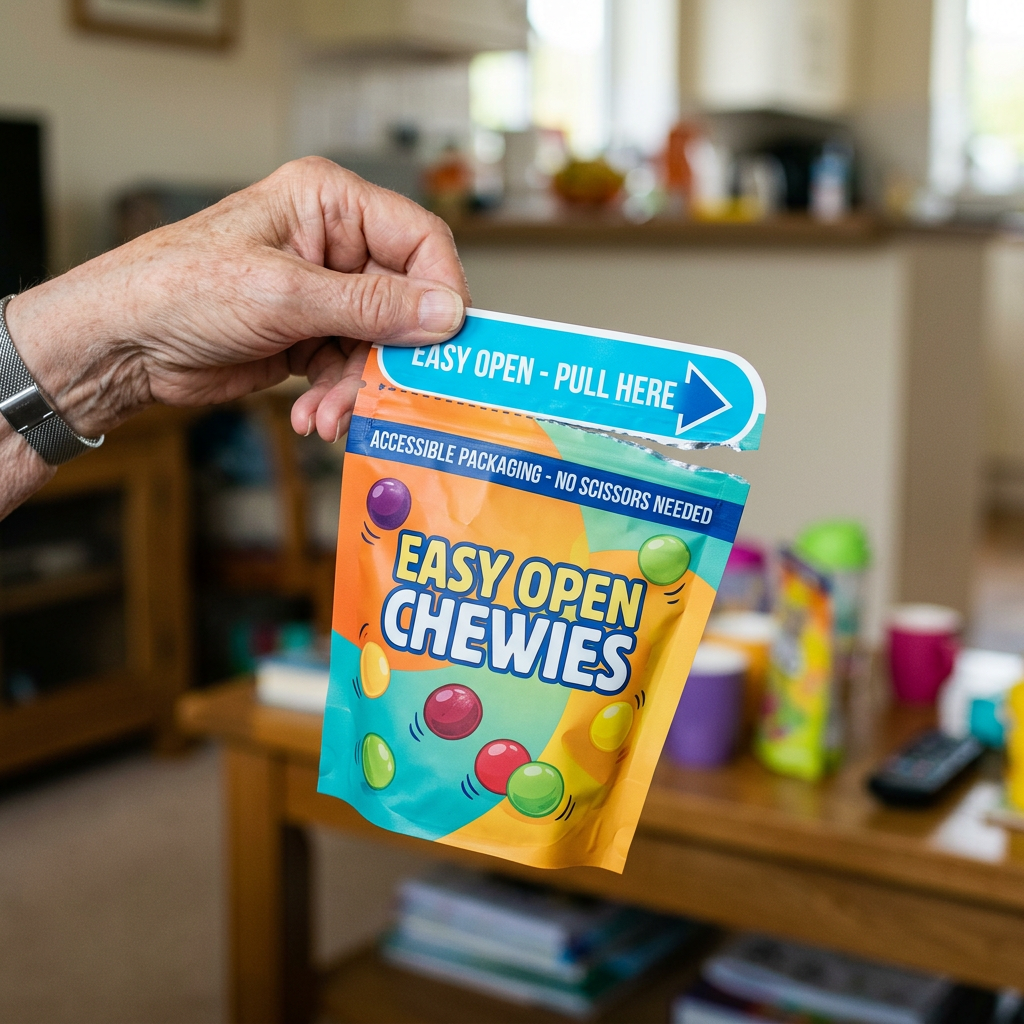
Begin by thinking about the relationship between the lid and the base of the container. The lid may look great when you’re handing it over to the customer, however, this may prevent them from pulling the lid off the container. On the other hand, a lid that’s too loose will come off very quickly when pulled. The ideal connection (the lid fits perfectly onto the base) remains closed during handling and comes off easily with a slow, consistent pull. A series of sample testing reveals problems that cannot be seen using only drawings.
Adding tabs, thumb cuts, and/or wider areas to aid in gripping provide the customer a clearer location to begin opening. However, adding a ribbon provides an additional method for lifting lids and requires careful placement. Do not include elements that require nail sharpening or significant pinching. If adhesive tape or labels seal the package, leave a portion of the area that allows the customer to lift the seal without cutting.
The type of finish used on the surface affects how easily customers can grasp the box. Glossy surfaces may slip out of dry hands whereas a light textured surface will provide a better grip. Darker colors may also obscure the distinction between the top and bottom. Using a distinct color change around the opening may help customers locate where to pull on a dull day.
Test the sealed filled box using both hands and again using one hand while wearing thin rubber gloves. Test each prototype with customers of all ages and ask them to attempt to open the container without showing them how. Observe which part of the box they first reach toward, how long they hesitate before attempting to open it, and whether they rotate the box to determine where to pull. These actions typically indicate more information than simply asking the customer questions after the trial.
Easily accessible packaging does not mean the packaging is weakened. The candies must continue to be contained once moved or sold. Any modifications made should be tested under full load conditions. Hold the closed container upside down and shake it back and forth. If the lid moves around, make adjustments based upon your findings and repeat the testing process.
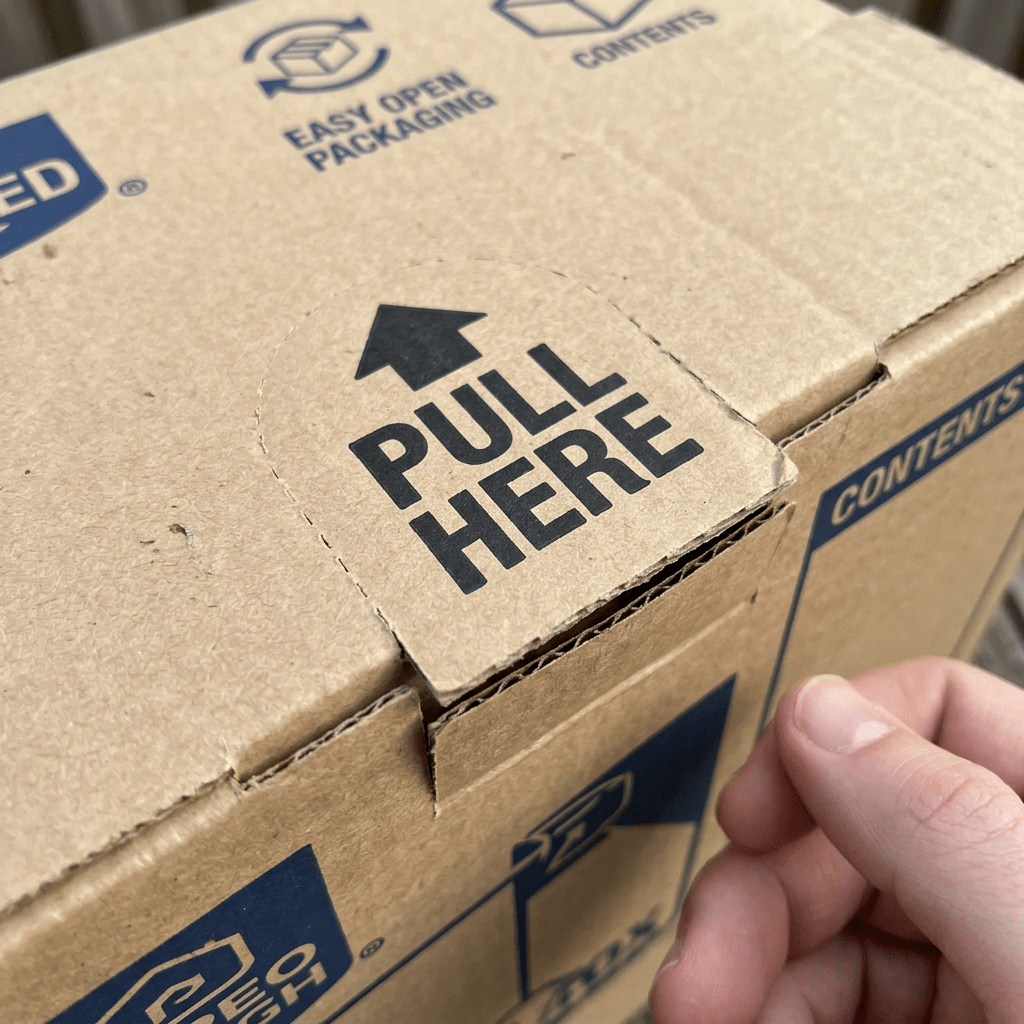
If necessary, providing instructions can assist customers who find it difficult to identify where to pull. It may take just a couple of short phrases such as “pull here” to allow the customer to understand where to start. When creating instructions use large print lettering so customers can easily read them and position them adjacent to the component that moves. Your objective is not to place a plethora of instructions on the packaging, but rather eliminate the single area in which a customer becomes stranded.
When considering thoughtful packaging options for candies, we should not focus solely on assisting older adults or those with disabilities. The new packaging designs should be equally accessible for all consumers without drawing attention to either their age or disability. The design should clearly show where to pull to gain entry into the container; be securely fastened until desired; and allow customers to access their treats with minimal effort. This modest consideration can convert packaging from a hindrance into a useful tool for facilitating sharing among all consumers at the table.


 Industrial Packaging Business