Buyers will select a box of candy, and then flip it around. They would like to know the various candy types contained within the box; if there is any nut content; and how best to preserve the candies.
When consumers cannot easily identify the desired information, many will simply replace the box. When providing consumer-friendly information to candy boxes, shopping feels less complicated.
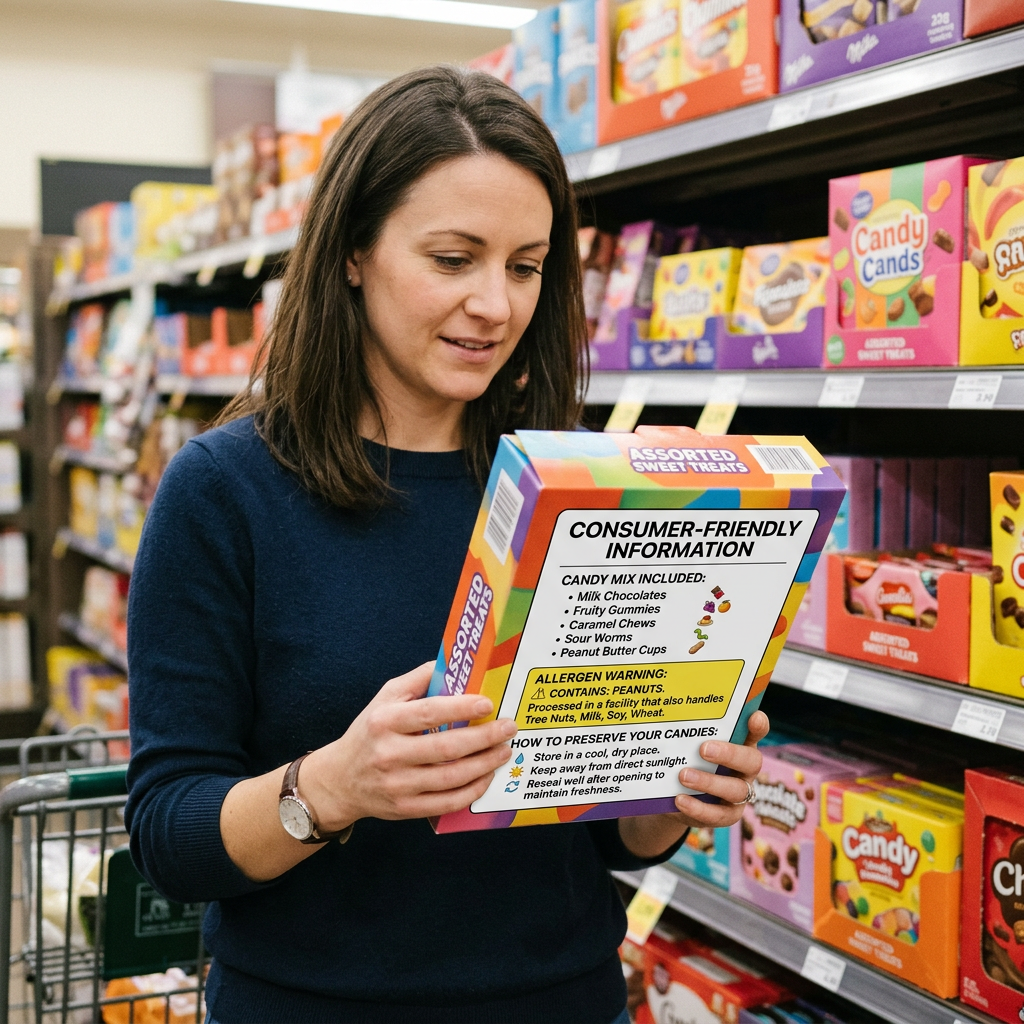
You should first establish which questions consumers typically inquire about when purchasing candy. As such, your sales associates are likely to receive these inquiries frequently. These common questions serve as an excellent starting point for developing consumer accessible information on your candy boxes.
The first step to establishing consumer-friendly information is identifying the candy varieties within the box. Although a variety box (a box containing multiple types of candies) may be visually appealing, consumers should not be required to “guess” what they are selecting.
Identify flavor names clearly. Identify whether the various candies contain any nuts. Clearly provide instructions regarding preservation. Establish descriptions using descriptive terms for the types of candies. For example, “dark chocolate caramel,” provides more insight into the candy being selected than does a generic term. Consider creating a fun name for your product and including a short description next to the name.
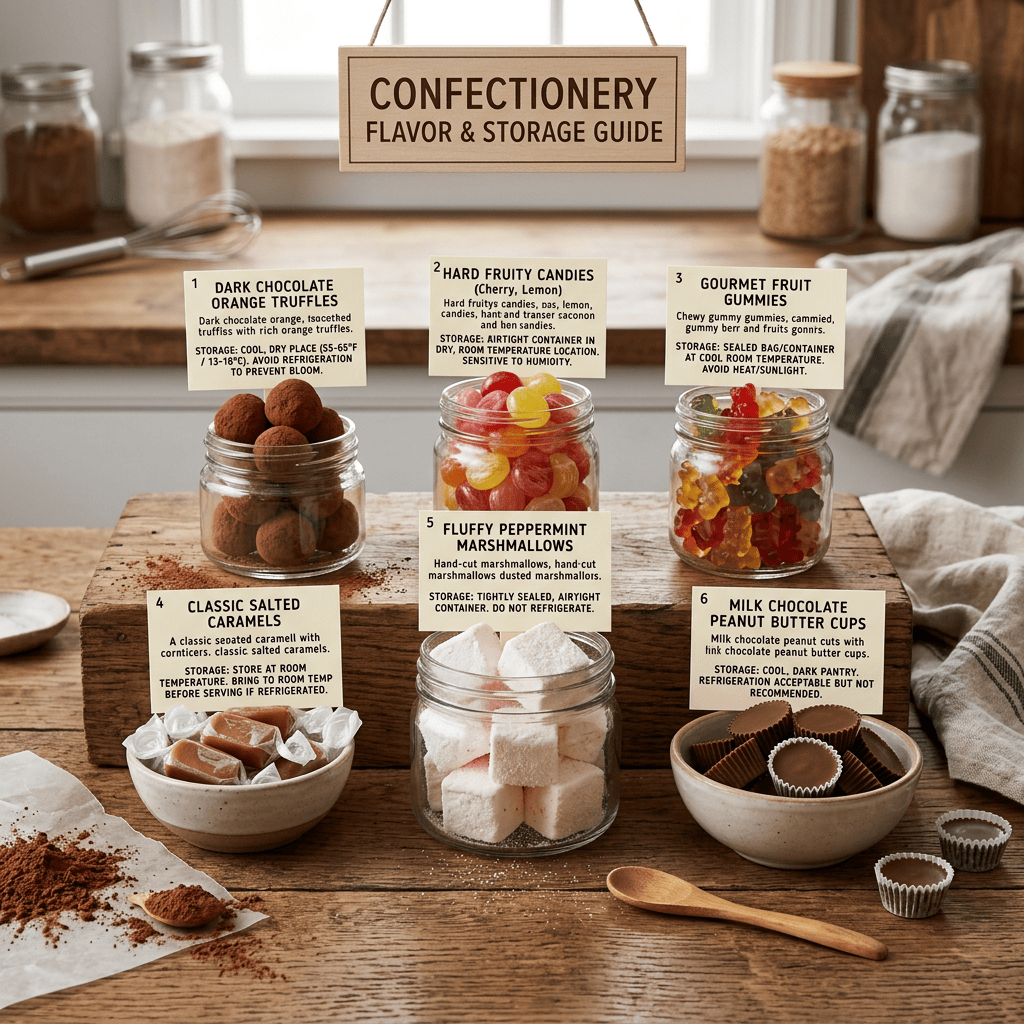
To assist in identifying the various candy selections, create a simple identification guide. Include a clear description for each candy selection utilizing either a picture or words that match the contents of the box. Ensure that this guide remains accurate and reflects changes made to your products’ mixes.
Tie product details directly to specific boxes. To avoid confusion when using similar packaging styles for two separate product lines, clearly label each product line. Your sales associates should be able to differentiate between each product line without having to open each box.
Product labeling, particularly ingredients and allergens, requires special consideration. Utilize validated data obtained from your recipes and suppliers. Do not rely upon anecdotal evidence, nor should you create “allergen-free” claims based solely on your memory.
Research local regulations prior to producing product labels. Allow sufficient space within your label design for any applicable regulatory information. Consider both the individual purchasing the candy and the intended recipient of the gift. Although the purchaser may have familiarity with your store, the recipient may not be aware of your store. Therefore, regardless of who receives the gift, your candy box should provide some level of relevant information.
In addition to providing flavor information, consider recommending storage methods that correspond to each type of candy. Various candy fillings and recipes may require unique handling practices. Unless each product corresponds to the recommended storage method, do not include a single recommendation for storing all products together.
Utilizing date or batch coding? Clearly label the location of these codes. Maintain documentation within your organization so that employees may correlate completed boxes with their respective production batches.
Prior to placing a bulk order for labels, produce a test label at full scale. Attach the test label to a fully filled box and evaluate it in a typical retail environment under standard lighting conditions. While small font characters may appear adequate on a computer monitor, they may prove difficult to read in a retail setting.
Request another employee who was not involved in designing the label to review it. Ask whether he/she could quickly locate the flavor information and storage guidelines.
Labels designed for consumer accessibility result in enhanced ease-of-use when making purchases from a candy box and facilitate communication between consumers and retailers.

